How I Built a Mini Shoegaze Pedalboard for Under $300
In case you haven’t noticed, the classic "wall of sound" associated with shoegaze usually requires a pretty deep wallet nowadays. As singer/rhythm guitarist of Tulsa indie band Loser of Oz, I have to dial in that signature guitar tone. What I definitely do not have is a thousand dollars to drop on vintage or boutique pedals.
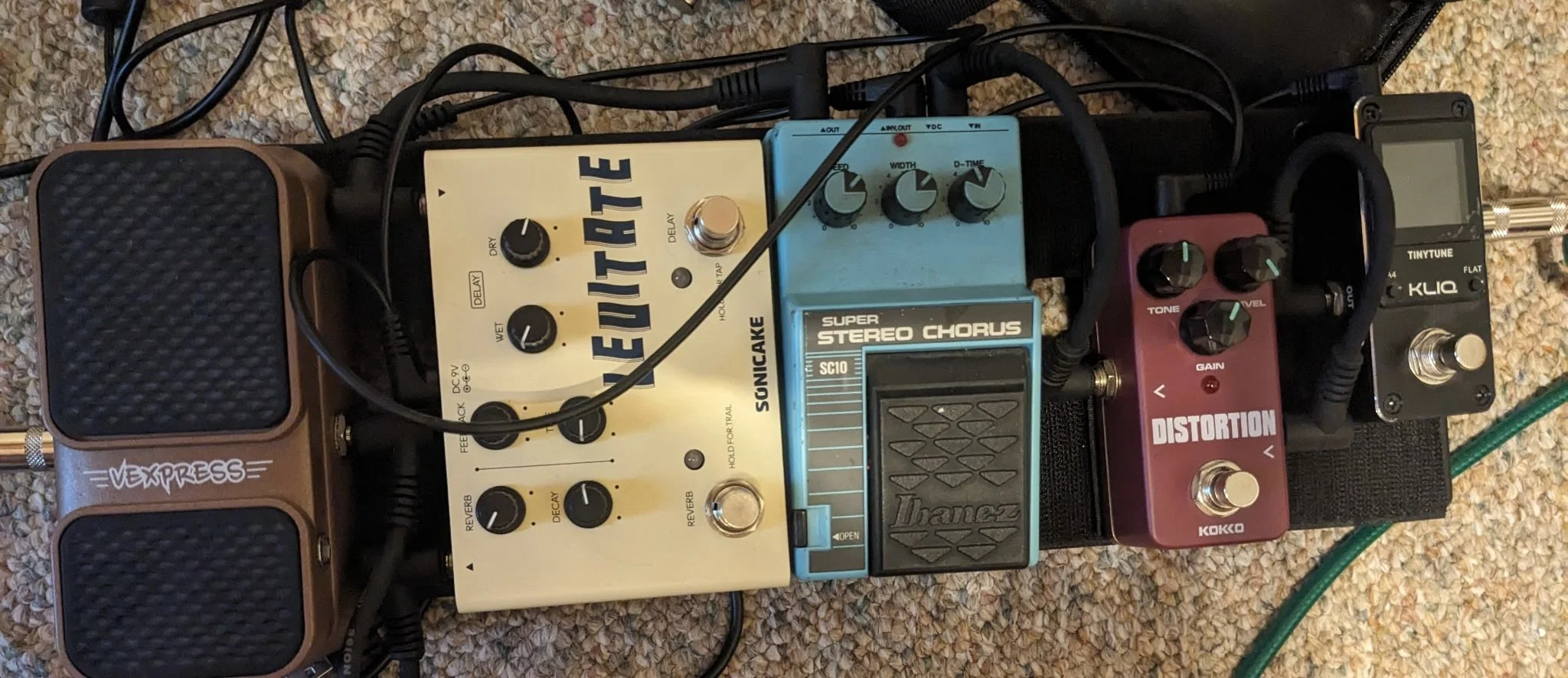
LEft to right (opposite of signal chain): expression, delay/verb, chorus, dist, tuner
Full disclosure, I am definitely not a gear head. I don't know much of the deep science behind analog circuits, so engineering my own is definitely not on the table for now. Instead, I set out on a budget-friendly mission to find cheap, reliable pedals that I could essentially just slap together.
The result is a monstrous, washed-out shoegaze sound that is show-ready for under $300. If you are a beginner looking for an affordable entry into shoegaze and adjacent rock guitar tones, here is how I built my budget mini pedalboard.
The Budget Shoegaze Pedal Lineup
Every pedal on my board serves a specific purpose in building up that massive fuzz and dreamy atmosphere. Here is the exact breakdown of the gear I use, what they do, and what they cost.
1. KLIQ TinyTune Pro ($30)
The KLIQ TinyTune Pro is a tiny tuner pedal that takes up little space on my board. It does exactly what it's supposed to do quickly and accurately, which is essential when you're tuning up live.
2. Azor Mini Overdrive ($25)
(Note: This one isn't pictured, but it's a staple) The Azor Mini Overdrive creates a wonderfully warm overdrive. When I don’t need full-on distortion, this gives me a crunchy garage rock rhythm tone.
3. Kokko Mini Distortion ($27)
Shoegaze demands a heavy foundation of grit, and the Kokko Mini Distortion packs a punch. It creates a decent, fuzzy distortion that is adjustable. It adds a lot of bite to my sound, and layered with the overdrive, it’s disgusting.
4. Vintage Ibanez SC10 Super Stereo Chorus (Free / Approx. $125 Used)
I lucked out. This vintage 80s chorus was given to me by my late uncle for free, though they typically go for around $125 on the used market. The Ibanez SC10 adds a very pretty, swirling vintage chorus effect. When used clean, it gives the guitar that classic indie dream-pop sound.
5. Sonicake Levitate Delay and Reverb ($50)
If you want to play shoegaze, delay and reverb are non-negotiable. When I saw that the Sonicake Levitate offered a delay and digital reverb all in one, I thought, "Heck yeah I’ll take it." It is very ethereal and spacious, and essential for creating a giant, echoing sound.
6. Sonicake Expression Pedal ($40)
Having a massive wall of sound is great, but you need a kill switch. I added another Sonicake, their Expression Pedal, to the end of the chain so I can quickly shut the whole thing down if everyone’s ears start ringing, or if someone throws tomatoes at me on stage.
The Verdict: Slapping It All Together
Total Cost: $172 out of pocket (or ~$297 if you have to buy the Ibanez chorus used)
You don't need to be a gear wizard to find your “sonic identity.” By combining cheap, accessible pedals with a bit of experimentation, I managed to build a powerful, gig-ready pedalboard that’s easily portable too. When these pedals are used together, the individual budget tones blend into a singular, monster wall of shoegaze atmosphere.
Stream Loser of Oz
This pedalboard setup is what’s behind my guitar tracks in Loser of Oz. We are a new indie rock band based right here in the Tulsa, Oklahoma music scene, blending heavy shoegaze-infused textures with indie rock energy.
Our music is available across all major streaming platforms! If you want to support independent local music, please head over to Spotify or Apple Music or whatever you use to stream our tracks.